
All About the AC40 in the America’s Cup Landscape
The 38th America’s Cup has introduced a fascinating shift in its sailing dynamics with the inclusion of the AC40 one-design foiling monohull. While the event retains the spectacular AC75 monohull class for the main match in Naples, the AC40 is stepping into a crucial role, primarily focusing on training and the cultivation of sailing talent. This innovative craft embodies a new approach, promoting inclusivity and skill development in the competitive sailing community.
Under the updated Protocol for the 38th America’s Cup, teams can deploy up to two AC40s in preliminary regattas. The format mandates a mixed crew profile, showcasing emerging talent alongside seasoned sailors. Notably, the upcoming Youth America’s Cup and Women’s America’s Cup will exclusively utilize the AC40 class, cementing its status as an integral element of the Cup’s ecosystem.
Beyond serving as a platform for these groundbreaking events, the AC40 has implications for the main 38th America’s Cup. A new requirement mandates the inclusion of at least one female athlete on board the larger AC75 during main match racing, reinforcing the Cup’s commitment to diversity and inclusion.
The incorporation of AC40s into training regimens is vital, especially given the stringent cost-control measures associated with the 38th America’s Cup. Teams are heavily leveraging the AC40 alongside advanced simulators developed by the Defender, Emirates Team New Zealand, to enhance pre-race analytics and coordination.
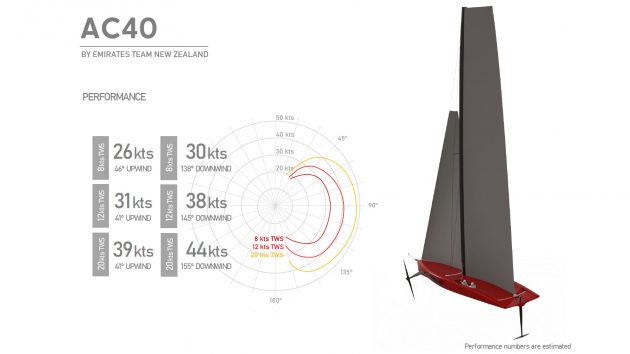
The Birth of the AC40
The AC40’s inception traces back to the preparations for the 36th America’s Cup in Auckland. Traditionally, teams had resorted to building custom test platforms—known as LEQ12s—to experiment with new design concepts surrounding large, keel-less foiling monohulls. These vessels allowed for extensive experimentation with foils and sails before formalizing designs for their AC75s.
The last team to launch such a test platform was Emirates Team New Zealand with their boat, Te Kahu, which utilized advanced simulation techniques to gain a competitive edge. The AC40 was developed based on the lessons learned from the successful AC75, Te Rehutai, encapsulating the best features while adhering to one-design principles. As a strategic move to manage costs, custom LEQ12 platforms are now outlawed, giving the AC40 a primary role in training and data collection across the board.
Despite the regulations banning customizations for racing, teams can modify their AC40s for training purposes, creating an extensive testing environment while reverting to one-design specs for competition.
The Mechanics Behind the AC40
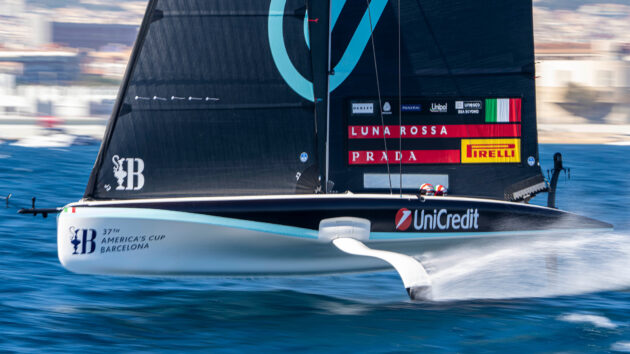
The AC40 is ingeniously designed to replicate the behavior of its larger counterpart, the AC75. Equipped with large, canting, weighted foil arms on each side, the sailing craft does away with a traditional keel. Instead, it utilizes a single hydrofoil, keeping one foil elevated to reduce drag and optimize righting moment.
Offering manageable crew requirements, with only four sailors onboard, the AC40 relies on automated systems for maneuvering. A fully battery-powered setup operates the essentials like foil cant, wing flaps, rudder trim, and sail actuators—eliminating the need for traditional grinding, thereby streamlining the crew’s workload. Automated flight-control systems help maintain optimal ride height, while self-tacking headsails contribute to agility during quick maneuvers.
The rigging shares design principles with the AC75, featuring a D-shaped mast that supports dual sail skins. This innovative structure generates efficient soft wingsail performance, offering aerodynamic benefits akin to hard wings while facilitating easier sail adjustments. The absence of a traditional boom allows for dynamic sail shaping through internal hydraulics, enhancing versatility on the water.
The AC40 as a One-Design Class
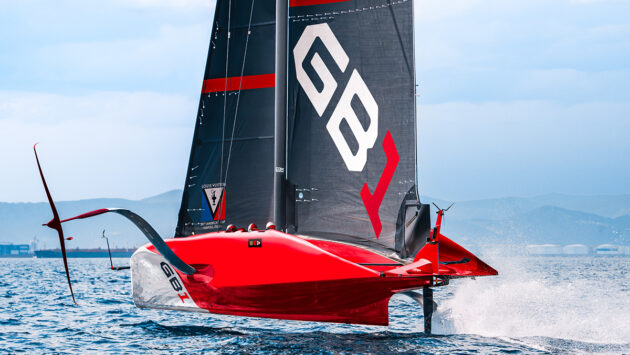
The AC40 serves as a dual-purpose vessel within the America’s Cup framework. For events like the Youth and Women’s America’s Cups, as well as preliminary regattas, the boats adhere strictly to one-design rules. This parity in design ensures an even field where competitors’ skill and strategic prowess dictate the outcomes.
Nevertheless, the AC40 also functions as a foundational platform for teams to experiment and refine their racing strategies. Given the limitations imposed on the teams regarding testing and costs, the AC40 proves invaluable for trialing foil configurations, flap adjustments, and electronic controls in a controlled, cost-effective environment prior to implementing any modifications on the primary AC75s.
 If You Enjoyed This…
Yachting World caters to bluewater cruisers and offshore sailing enthusiasts with monthly content filled with adventure and practical features for every sailing dream.
Explore more through a subscription, offering insights conveniently delivered to your door. Check out our latest offers and enjoy considerable savings.
Note: We may earn a commission when you purchase through links on our site, at no additional cost to you. This does not compromise our editorial integrity.