
Offshore wind farms, energy islands, ports, and proposed “Offshore Power Zones” could together form the foundation of an integrated maritime energy system capable of supporting large-scale vessel electrification across Northern Europe, according to a study by Maersk’s Stillstrom, Baltic Energy Island, and the Port of Roenne.
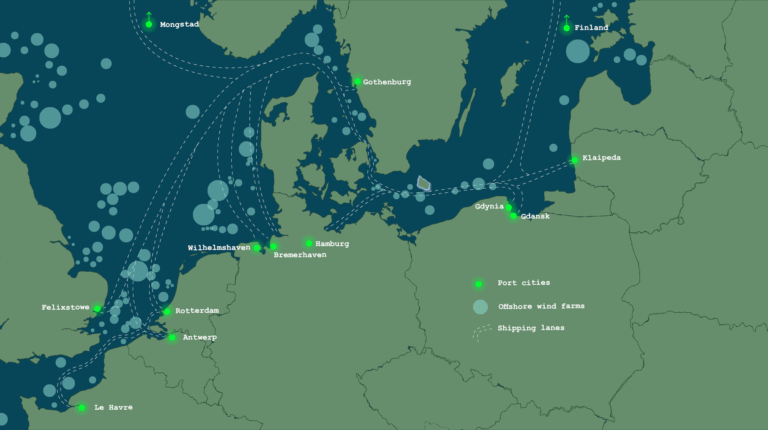
In the insightful whitepaper titled “Bornholm Energy Island: Powering Maritime Electrification,” the authors, including experts from Stillstrom and the Port of Roenne, propose a transformative vision for maritime energy. By combining offshore wind generation with advanced port infrastructure and innovative offshore charging concepts, this initiative aims to facilitate a significant shift away from fossil fuels for ferries, cargo ships, and service operation vessels (SOVs).
Launched in December last year, the study discusses the potential of developing offshore wind farms and transmission infrastructure around the Energy Island Bornholm in Denmark. This innovative model could serve as a blueprint for further maritime electrification across pivotal European shipping corridors.
According to their findings, over 37,000 cargo vessels navigate past Bornholm annually, consuming approximately 3 million tons of marine fuel. This substantial traffic results in a staggering emission of around 10 million tons of CO2 each year. Transitioning to full electrification of this fleet could necessitate about 17 TWh of electricity annually, effectively replacing roughly €2 billion worth of fossil fuel imports with clean, domestically produced renewable energy.
One of the standout innovations discussed in the paper is the introduction of Offshore Power Zones (OPZs). These zones allow vessels to access wind-generated electricity while at sea for battery charging or while running hotel loads. The vision includes linking these OPZs with electrified ports to create an “electric shipping highway,” stretching from the English Channel, through the North Sea, and into the Baltic Sea, revolutionizing how maritime operations harness energy.
The study doesn’t overlook current technological advancements. Improved battery technology and robust regulatory frameworks are playing a crucial role in facilitating the shift toward maritime electrification. However, there’s a caveat: the availability of reliable power sources in well-located areas remains a significant challenge to overcome.
Examining infrastructure needs further, the Port of Roenne exemplifies how modern ports can adapt to support maritime electrification. With existing ferry routes, cargo operations, cruise services, and offshore wind activities, this port is well-positioned as a TEN-T Comprehensive port, indicating its capability to handle diverse maritime services while integrating new electrification demands.
Lastly, the report emphasizes that maritime electrification is not solely reliant on advancements in vessel technology. It highlights the necessity for coordinated planning that encompasses grid capacity, offshore generation, and port infrastructure. This holistic approach aims to ensure that maritime electrification is both practical and sustainable, setting the stage for a new era in marine transport across Northern Europe.