
Germany’s Deutsche Energy Terminal (DET), an enterprise under the German Federal Ministry for Economic Affairs and Climate Action, plays a pivotal role in enhancing the country’s energy landscape. As a state-owned operator of four liquefied natural gas (LNG) terminals, DET recently unveiled a timeline for launching its forthcoming floating LNG terminal. This development is crucial in the ongoing rollout of state-funded floating storage and regasification units (FSRUs), underscoring the strategic importance of LNG terminals in bolstering Germany’s energy security and resilience.
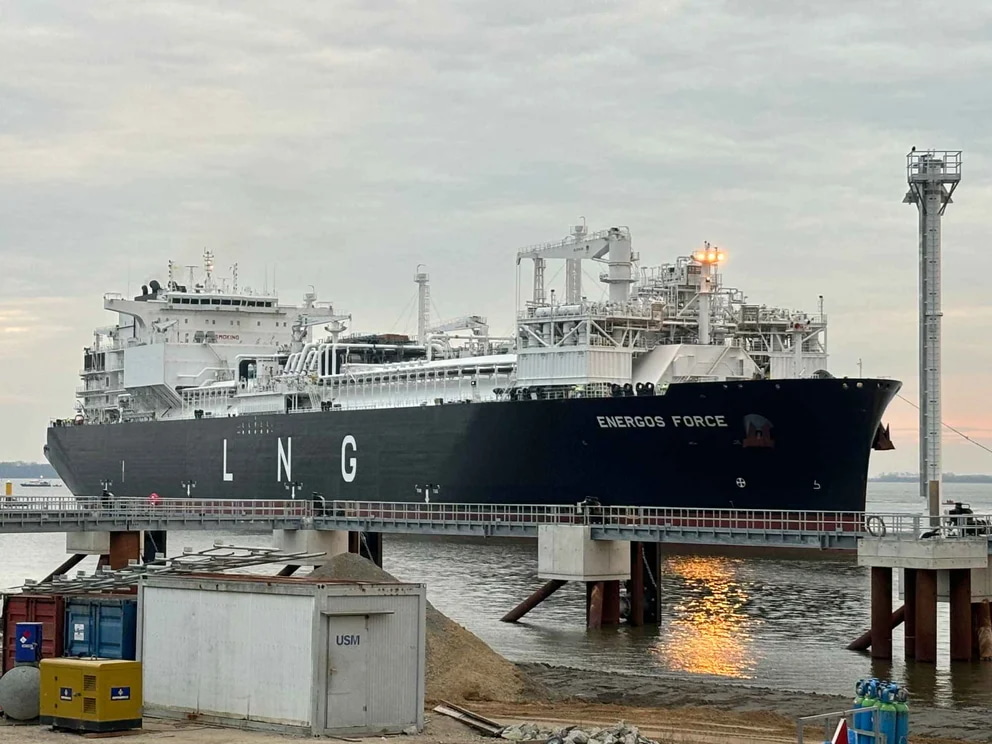
At the heart of this initiative, Deutsche Energy Terminal collaborates closely with local partners on behalf of the German federal government to effectively market and operate the FSRUs. These units are integral for converting LNG back into a gaseous state, effectively feeding it into the German gas grid. DET currently manages key terminals in Brunsbüttel, as well as two terminals in Wilhelmshaven, and is overseeing the construction of the FSRU in Stade.
The journey towards commissioning the floating LNG terminal in Stade has been peppered with challenges during its construction phase. Nonetheless, DET is optimistic, with operations now slated to commence in September. This transition is hailed as “good news for Stade as an energy hub and for Germany’s security of supply.”
Significant technical and safety assessments have been conducted, resulting in a clear roadmap for the first LNG delivery. Additionally, DET has sub-chartered the FSRU Energos Force, designated for operation at Stade. Currently, this regasification vessel is working in Jordan, but contracts ensure its timely return to Germany for the commissioning phase at the specifically constructed Stade-Bützfleth jetty.
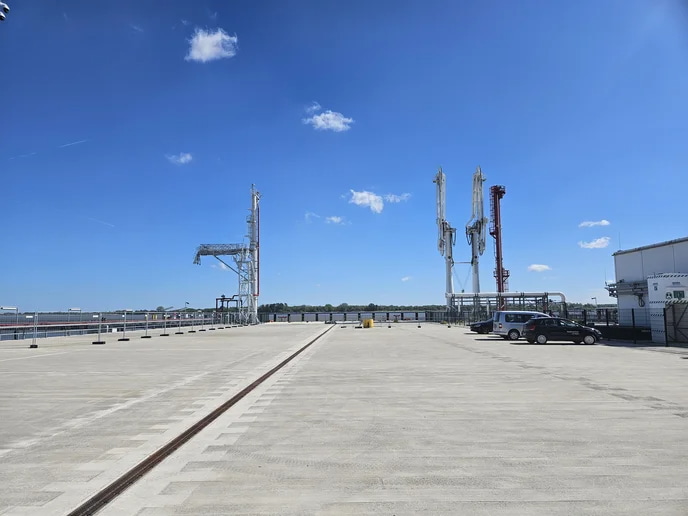
In announcing these developments, Deutsche Energy Terminal emphasized, “This completes the federal government’s terminal concept for securing gas supplies, with Stade complementing the existing terminal locations in Brunsbüttel and Wilhelmshaven.” This strategic alignment ensures that the timely return of the FSRU Energos Force is a priority. Upon arrival, the regasification vessel will be connected to the loading infrastructure, including specially designed loading arms. The following weeks will involve numerous safety tests before regular operations can officially begin.
Amidst this progress, a legal battle has emerged as a private operator, Deutsche ReGas, criticized DET’s LNG pricing policy. Claiming it is detrimental to the German market, the company has taken steps to challenge the European Commission’s approval of a substantial €4.96 billion subsidy scheme for state-controlled LNG terminals. According to Deutsche ReGas, such actions could potentially damage competition and undermine gas security in the region.

Power Your Brand With Offshore Energy ⤵️
Take the spotlight and anchor your brand in the heart of the offshore world!
Join us for a bigger impact and amplify your presence at the core hub of the offshore energy community!