
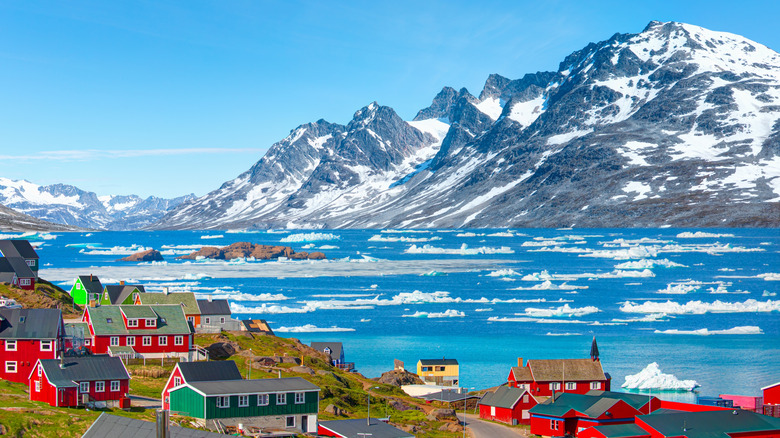
In the far northern reaches of our planet lies an extraordinary place filled with majestic glaciers, cerulean lagoons, and volcanic rock formations. This is Greenland, an autonomous nation of the Kingdom of Denmark, with a 4,500-year-plus history of human settlement. This Arctic land mass lies between the North Atlantic and Arctic Oceans, with Canada’s Ellesmere Island just 16 miles to the northwest and Iceland about 200 miles to the southeast. On a map, it appears as an enormous white expanse because 80% of the island is covered by the Greenland Ice Sheet. This remarkable environment offers travelers boundless opportunities for winter activities like dog-sledding, skiing, and snow-trekking, while also creating an impossibly white wonderland characterized by a mountainous coastline, glacial pinnacles, crevasses, dramatic fjords, and rapidly flowing rivers.
Here’s a piece of trivia you may already know: Greenland is the world’s biggest island that isn’t a continent. Spanning an impressive 836,330 square miles (including its offshore islands), Greenland is roughly three times larger than Texas. The silver medalist doesn’t even come close in size—New Guinea, the second-largest island, has an area of just over 317,000 square miles.
This country blends ancient traditions with modern thrills. In one day, you could learn about important Inuit rituals like the drum dance and mask dance, view Greenlandic art, try your hand at fly fishing, and take a flightseeing tour in a helicopter high above brilliant-white icebergs. In short, Greenland, a sustainable, gorgeous, and wildly underrated island, is one of the most spectacular places on Earth to witness otherworldly landscapes, embark on epic adventures, and have authentic Indigenous cultural experiences.
Choose Your Own Adventure in Greenland
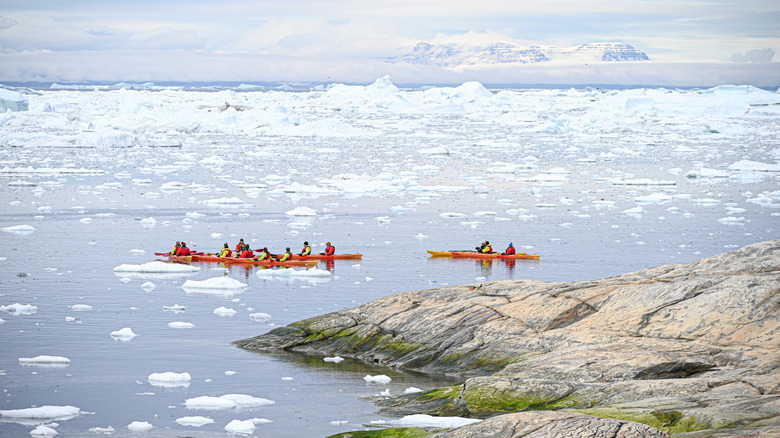
Greenland, still a burgeoning tourism destination, is an outdoor adventurer’s dream. Packed to the brim with ice caves, trails, and waterfalls to explore, the country offers a plethora of guided tours year-round. Ilulissat, the “iceberg capital of the world,” boasts one of the Big Arctic Five experiences—ice—with its Ilulissat Icefjord. A UNESCO World Heritage site, this approximately 35-mile-long fjord is a breathtaking seascape dotted with icebergs that have calved from the Sermeq Kujalleq glacier. Travelers can gain stunning aerial views of calving glaciers during a fixed-wing plane flyby or sail through the icy maze at sunset. More adventurous spirits can mountain bike or trek alongside the fjord at their leisure.
From January until April, snow bunnies can hit the slopes—Nuuk, the capital, has the highest ski lift, ascending to a 5,900-foot peak. For advanced skiers, heli-skiing trips offer the chance to dive into untouched slopes, all while marveling at extraordinary coastal vistas. Prefer a slower pace? Exploring the backcountry on snowshoes is also a quintessential Greenlandic experience. Another must-try is dog-sledding, an ancient mode of transport that has origins stretching back thousands of years. Ideal between February and April, Kangerlussuaq and Sisimiut are excellent hubs for this activity, along with exciting snowmobiling opportunities. Feel the adrenaline as you connect with these powerful Arctic hounds, racing across an expanse of snow.
During the warmer months, a range of water-based activities await. Engage in stand-up paddleboard tours while scanning the waters for whales. Alternatively, hop into a kayak, a traditional Inuit craft, and absorb the serenity of the sea, framed by towering peaks.
Planning Your Trip to Experience Greenland’s Natural Beauty
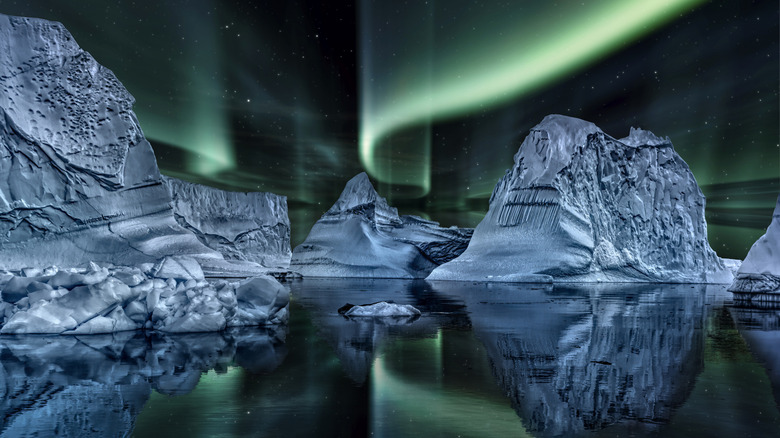
Deciding when to visit Greenland will depend on what you’d like to see and do. Those seeking the flickering dance of the aurora borealis may wish to venture here during September, October, March, or April (the shoulder seasons), when temperatures are milder and the skies aren’t cloaked in the extensive darkness of polar night. Conversely, a summer trip allows visitors to experience the enchanting midnight sun, where the sun never sinks below the horizon from late April to early August in the north. The landscapes are at their most photogenic, as warm colors brush the rugged terrain, making it ideal for fishing, trekking, and boating.
To reach the island, flying or taking a chartered boat or cruise is essential. Kangerlussuaq and Nuuk airports (both in the southwest) serve as major international hubs. Nuuk offers direct flights to numerous domestic and international destinations, including Copenhagen, Reykjavik, Iqaluit, and seasonal routes to Newark. However, Nuuk is not just a transit point; visitors can indulge in Greenlandic and international cuisine, explore various museums, hike scenic trails, and spot seabirds on Puffin Island, just an hour south by water taxi.
For those wishing to embrace a slower travel experience, Arctic cruise operators provide a plethora of options to explore the country by water. For instance, the Canadian Arctic Explorer, scheduled for 2026, promises a thrilling 17-night polar expedition from Kangerlussuaq to St. John’s in Newfoundland, Canada.