
South Korea’s Hanwha Ocean has signed a non-binding memorandum of understanding (MOU) with Kanata Clean Power & Climate Technologies Corp. to explore potential cooperation on a proposed development of a floating liquefied natural gas (FLNG) export project planned for Prince Rupert, British Columbia, Canada.
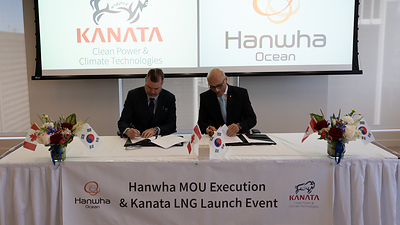
This strategic memorandum of understanding (MOU) represents a significant step forward for the collaboration between Hanwha Ocean and Kanata Clean Power. The partnership is set to engage in a variety of avenues including engineering, construction, operations, investment, and LNG offtake, all centered around the proposed Kanata LNG project in Prince Rupert. With total estimated capital expenditures around $15.7 billion, this ambitious project is poised to play a pivotal role in the global energy landscape, targeting a capacity of up to 12 million tonnes per annum (mtpa).
The MOU encompasses a broad spectrum of collaboration opportunities between the two firms. These include the engineering and construction of FLNG production and associated facilities, operational and maintenance services, strategic equity participation by Hanwha or its affiliates, long-term LNG purchase agreements, and various midstream solutions like LNG carriers (LNGC) and other logistical support. This multifaceted approach aims to maximize the efficiency and effectiveness of the entire project lifecycle.
Philippe Levy, President of Hanwha Ocean’s Energy Plant Unit, expressed enthusiasm about the partnership, noting that Canada’s world-class natural gas resources provide a strong basis for reliable LNG supply to Asia-Pacific markets. He articulated, “We are pleased to establish this strategic relationship with Kanata and to explore how Hanwha Ocean’s FLNG, offshore engineering, construction, and marine energy capabilities could contribute to the proposed Kanata LNG project.” Levy emphasizes the importance of a flexible, scalable approach to floating LNG developments that align with technical, commercial, environmental, and regulatory conditions.
As both companies work towards finalizing technical and commercial considerations, it’s important to recognize that significant groundwork lies ahead. Levy acknowledged this, stating, “This MOU is an important first step,” while reaffirming the need for a disciplined and responsible evaluation of the opportunity.
Situated strategically near Prince Rupert, Kanata LNG aims to leverage modular construction and marine-based liquefaction technology. As North America’s closest Pacific port to Northeast Asia, the location is ideal for tapping into burgeoning markets and facilitating efficient exports. The planned floating LNG export facility is forward-thinking, aiming to adapt to varying demands while maintaining environmental considerations.
In tandem with these infrastructural developments, Robert F. Delamar, Chief Executive Officer of Kanata Clean Power, expressed his delight in welcoming Hanwha Ocean as a strategic partner. He highlighted Hanwha’s recognized capabilities in floating infrastructure, shipbuilding, and energy systems, asserting that their expertise aligns perfectly with advancing the Kanata LNG project.
Moreover, Kanata has taken a progressive stance by extending to participating First Nations the option to acquire up to a 50% ownership interest in the project. This innovative approach not only promotes localization but also emphasizes inclusivity in the development process, subject to negotiations and regulatory approvals.
Finally, it is essential to note that the Kanata LNG project will still be subject to various regulatory approvals, including environmental assessments and community engagement processes. The involvement of Indigenous communities is a critical aspect of this initiative, showcasing a commitment to responsible development and sustainable practices.