
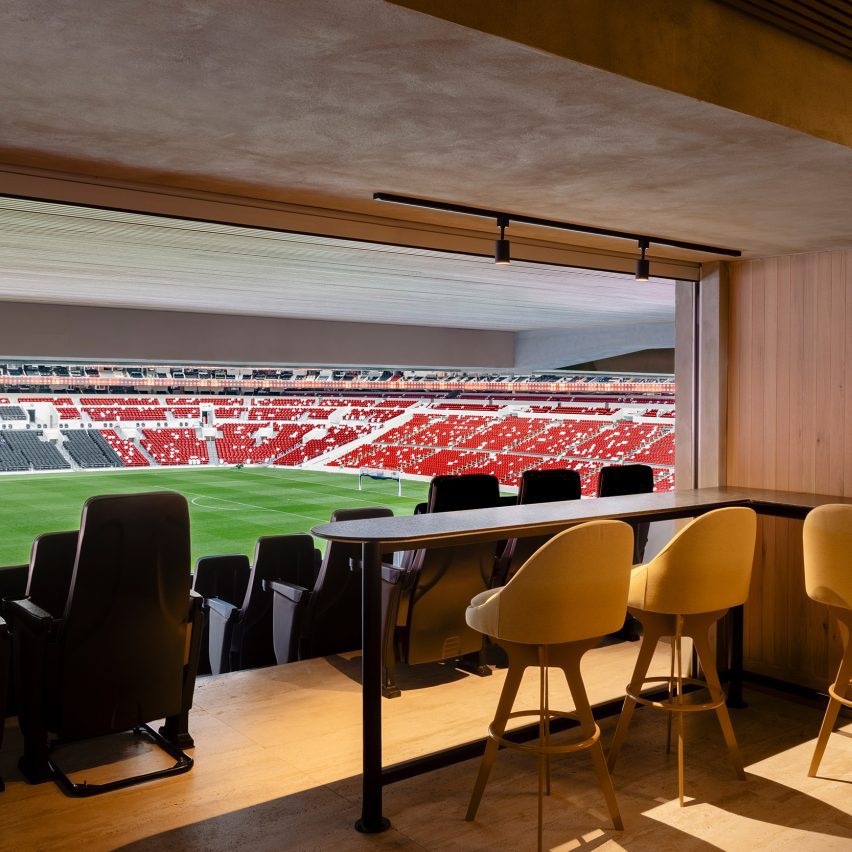
A transformative project is underway at Mexico City’s Azteca Stadium, one of the most iconic venues set to host the 2026 FIFA World Cup. A consortium of local designers is revitalizing the interiors of this historic site, integrating modern aesthetics with cultural significance through a custom furniture collection. The studios involved—CUAIK | CDS, Luis Huerta, Estudio Ignacio Urquiza Ana Paula de Alba, CAAM Arquitectos, and Clásicos Mexicanos—are collaborating to enhance the stadium’s hospitality experience while embracing its rich heritage.
A Design Revolution
This ambitious overhaul includes a comprehensive redesign of 15,000 square meters of interior spaces, all coordinated alongside Populus, an architectural firm focused on the stadium’s superstructure. The designers aimed to create a visually cohesive environment, enhancing street-level access points, reception areas, lounges, and other hospitality zones. Unique color schemes help establish distinct atmospheres, with all spaces unified by the custom furniture collection that draws from the stadium’s original modernist design.
Celebrating Heritage
The participating design studios made it a priority to preserve the essence of the original modernist architecture while also recognizing the stadium’s historical value. Azteca Stadium is not just a sports venue; it is a cultural icon that has hosted significant global events, including the 1968 Olympics and the World Cups of 1970 and 1986. The studios expressed a desire to honor this legacy, framing the stadium as a “living archive” of Mexican culture and creativity.
Color, Material, and Form
On the west side, terracotta-clad entryways guide visitors into vibrant lounge areas. These lounges boast chromatic schemes—yellows and greens—integrated with wooden elements that social spaces directly amid the stands. The design focuses on permeability, encouraging fluid movement between the interior and exterior, essentially dissolving the boundaries to create a more interactive atmosphere.
At the easterly entry, the largest bar area offers an expansive array of seating with stunning views of both the pitch and the surrounding landscape. This design strategy not only enhances the fan experience but promotes social interaction, positioning the stadium as a communal venue before, during, and after events.
Clubs and Exclusive Spaces
Beneath the stands, the design team created various exclusive lounge areas linking to the tunnel and locker rooms, anchored by a central hub known as the Centerline Club. This intricately designed area winds around the stadium’s curvature, maintaining focus on the pitch. The glass wall of a prominent lounge showcases a striking mural by Cerámica Suro, narrating the stadium’s storied history, thus fostering a deeper connection with visitors.
Custom Furniture: The Colección EA
Partnering with Clásicos Mexicanos, the design consortium selected furniture from esteemed local manufacturers like Piztola, Cacao, and Patrones. The highlight of this furniture initiative is the Colección EA, inspired by the geometry and structural logic of Azteca Stadium. The collection features benches, chairs, and stools available in seven colors that are intuitively integrated with their environments, ensuring functionality without sacrificing aesthetic form.
Crafting a Monumental Identity
The overarching vision behind this renovation is to reinforce the monumental identity of Azteca Stadium. The studios conveyed a commitment to not only respect the stadium’s historic significance but also ensure its relevance and grandeur moving forward. The updated design is more than just modernized aesthetics; it’s a reaffirmation of the stadium’s place as an enduring symbol of Mexican pride and heritage.
The integrated efforts of local designers and architects manifest a dynamic interplay between the stadium’s past and its future, providing fans with an unparalleled experience that harmonizes sport and culture. As the 2026 FIFA World Cup approaches, Azteca Stadium stands prepared to continue its legacy, enriched by thoughtful design and memorable experiences.
The photography showcasing this remarkable transformation is credited to Zaickz Moz, capturing both the grandeur and intricacies of the renovation in stunning detail.