
Nigeria is targeting a revival of deepwater investment with new tax incentives designed to unleash up to $50 billion in delayed oil and gas projects.
Bola Ahmed Tinubu, Nigeria’s President, has approved a deepwater offshore investment framework aimed at unlocking $50 billion in new investments. This strategic reform aims to replace the long-standing method of project-by-project negotiations with a more transparent investment framework, effectively reigniting the country’s stalled, capital-intensive offshore development projects.
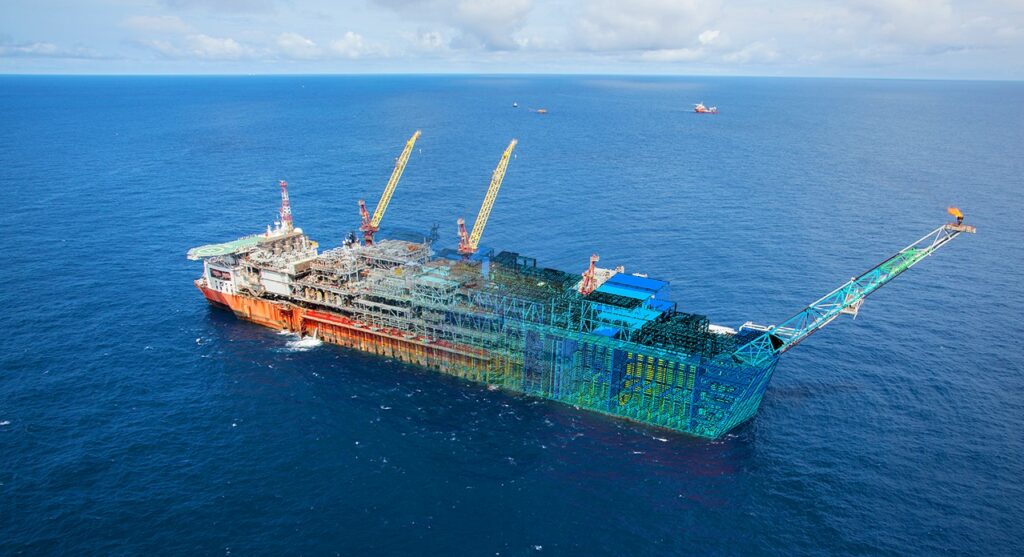
The framework is designed to offer clear eligibility criteria and a structured implementation process, fostering a rules-based environment that reassures investors. Starting with the approximately $10 billion Bonga South West project, this initiative is projected to enhance Nigeria’s attractiveness to globally mobile investment capital.
Olu Arowolo-Verheijen, the President’s Special Adviser on Oil and Gas, highlighted the framework’s commitment: “Projects qualifying under the framework will maximise execution within Nigeria whenever commercially and technically feasible. This will bolster local engineering, fabrication, marine logistics, technical services, and project management.
He further added, “Our objective is not only to amplify investment and production but also to foster skilled job creation, deepen local supply chains, and establish Nigeria as Africa’s regional hub for deep offshore project execution.”
The newly introduced framework, known as the Deep Offshore Oil and Gas Projects Incentives (Tax Remission) Order, 2026, seeks to substitute the antiquated method of doing business with a modernized approach that includes transparent eligibility criteria and implementation processes. This structure affords investors greater certainty while enhancing long-term national value.
Additionally, this approval empowers the NNPC (Nigerian National Petroleum Corporation) to amend production sharing contracts (PSCs) necessary for implementing the framework, aligning operations with the new investment strategy.
This milestone builds on dialogues between President Tinubu and Wael Sawan, the Chief Executive Officer of Shell. Tinubu emphasized the urgency for measures that would effectively unlock Nigeria’s deep offshore investment pipeline during their discussions.
Moreover, the Nigerian federal government has moved beyond project-specific solutions and has shaped a comprehensive investment framework applicable to various qualifying developments. This holistic strategy is expected to streamline operations, ultimately benefiting both investors and the Nigerian economy.
President Tinubu articulated the vision for this initiative: “Countries that attract long-term investments are not necessarily those with the richest natural resources, but those that provide the greatest certainty. This reform underlines our commitment to cultivating an investment landscape characterized by clear regulations, strong institutions, and sustainable partnerships.
By facilitating the flow of capital, fostering business growth, promoting community prosperity, and ensuring that natural resources yield enduring national value, Nigeria is positioning itself to become a formidable player in the global energy landscape.