
Norway’s state-owned energy giant Equinor has submitted a proposed program for the environmental impact assessment (EIA) of a potential field development in the Barents Sea for public consultation.
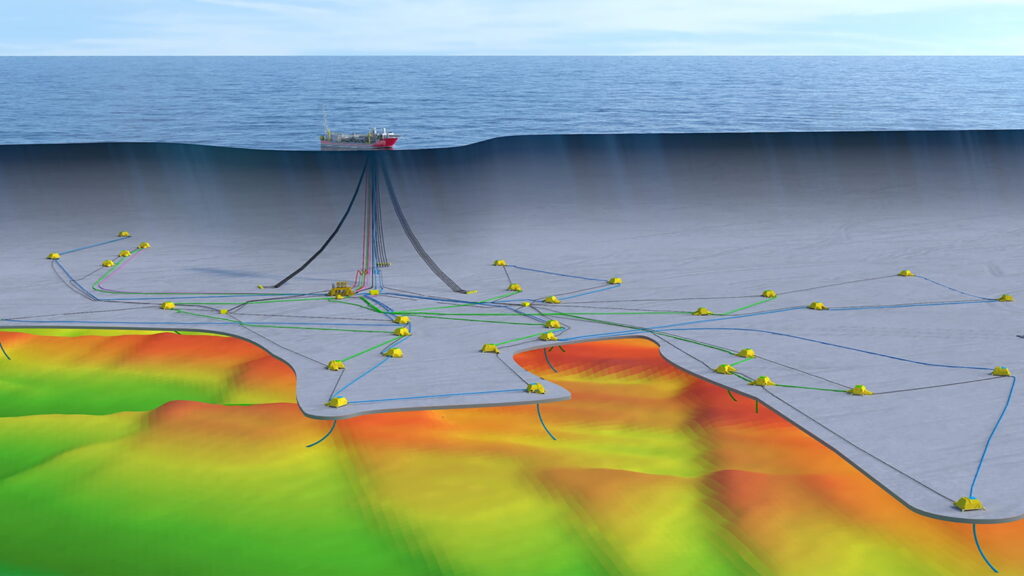
Equinor and its partners recently unveiled a proposed environmental impact assessment (EIA) program for the Wisting field development project, which is now available for a 16-week public consultation. This move signifies a pivotal step in maturing the project, which remains in its early phases. The advancement of the Wisting project hinges on further optimizations to ensure the initiative proves profitable and viable.
The Wisting field is notable as the largest oil discovery yet to be developed on the Norwegian Continental Shelf (NCS), boasting estimated recoverable volumes nearing 500 million barrels of oil equivalent. To facilitate production, the partnership has chosen a floating production, storage, and offloading (FPSO) vessel, which will play a central role in the project’s execution.
In addition to oil production, the project plans to explore the potential for carbon capture and storage (CCS) aimed at minimizing CO2 emissions. Given the power facility’s scale and the fact that it is being constructed as a newbuild, this assessment is an essential component of its environmental considerations. Equinor has indicated that the advancement of a CCS solution will be conditional on achieving the necessary technological and regulatory frameworks within acceptable cost and timeframe parameters for both the power generation and CCS facilities.
The partnership anticipates reaching a decision regarding the final concept selection and the possibility of further advancements by the end of 2026. The project aims to fulfill safety and efficiency requirements for operations in the Barents Sea, with a final investment decision (FID) scheduled for the close of 2027. This timeline underscores the considerable work ahead before a FID can be confirmed.
Trond Bokn, Equinor’s Senior Vice President for Project Development, remarked, “We have made significant improvements to Wisting since the postponement in 2022, but considerable work remains before we can determine whether there is a basis for a final investment decision.” He added, “Power from shore has been thoroughly assessed but was ruled out due to technical complexity and high costs. We are now continuing our work on power generation based on an energy-efficient gas turbine solution.”
If realized, the Wisting project holds the potential to generate substantial revenues for Norway, creating significant ripple effects throughout the nation’s supplier industry during both the development phase and operational years. The most meaningful impacts are expected to stem from roughly 30 years of operations, contributing to value creation and job opportunities across Norway’s industrial landscape.
As the drilling and subsea development phases constitute around half of the total investment in the Wisting project, the predominant portion of economic activity will occur within Norway. This grants local suppliers a unique opportunity to showcase their competitiveness in engineering, procurement, and the construction of the modules that will be utilized on the production vessel.
Furthermore, procurement activity is poised to foster significant opportunities for equipment suppliers across Norway. However, it is noteworthy that, due to size limitations and existing infrastructural constraints, the hull of the vessel cannot be constructed within Norwegian shipyards, leading to collaborations internationally.
The stakeholders involved in the Wisting project consist of Equinor (42.5%), Aker BP (27.5%), Petoro (20%), and Inpex Idemitsu Norge (10%). These partnerships will undergo further steps pending government approval as they finalize upcoming transactions. Positioned roughly 310 kilometers north of Hammerfest and situated at a water depth ranging from 390 to 418 meters, the Wisting field was first discovered in 2013 within the Hoop area of the Barents Sea.