
A groundbreaking ceremony marks the official start of an ambitious multibillion-dollar liquefied natural gas (LNG) project, managed by Inpex Masela, a subsidiary of Japan’s Inpex, in the Masela block of Indonesia.
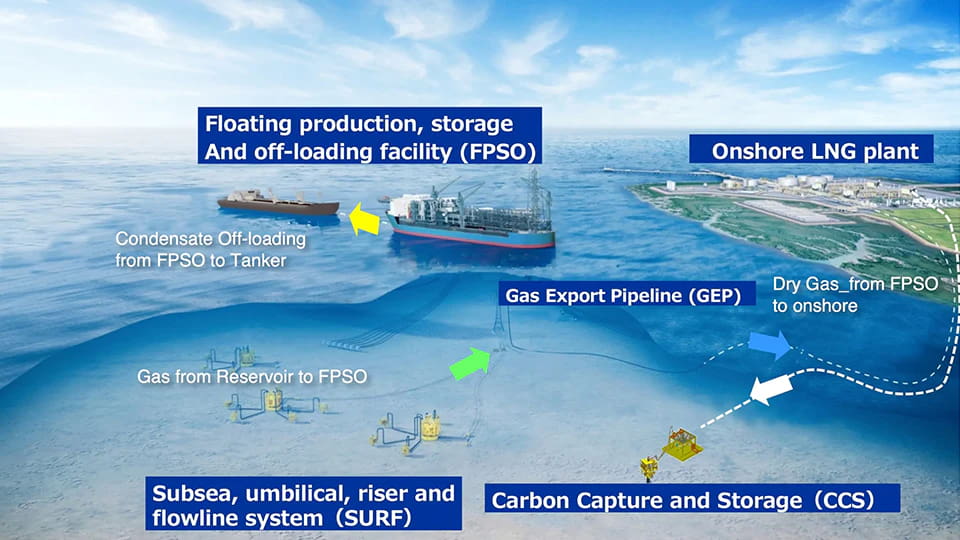
The long-awaited groundbreaking for the Abadi LNG project, aimed at producing up to 9.5 million tons of LNG each year (mtpa), was announced on July 16, 2026. This momentous occasion was highlighted by the Indonesian government in a statement released through the state news agency ANTARA, often the voice of official reports.
The announcement has signaled significant financial commitments, with reports indicating an investment of approximately $21 billion into the project. Bahlil Lahadalia, Indonesia’s Minister of Energy and Mineral Resources (ESDM), confirmed this investment amount, which also includes an additional $1 billion allocated specifically for carbon capture and storage (CCS) technology.
The Abadi project will be operated by Inpex Masela, which holds a 65% stake, alongside partners Pertamina (20%) and Petronas (15%). This strategic partnership follows Shell’s exit from the project in 2023. Furthermore, the production sharing contract (PSC) for this remarkable venture is valid until November 15, 2055.
The LNG project promises a production capability of around 150 million cubic feet of natural gas daily, with condensate production anticipated to reach up to 35,000 barrels per day. Such figures indicate the project’s pivotal role in enhancing energy production and addressing demand in the region.
Located in the Arafura Sea off Maluku Province in eastern Indonesia, the gas field is positioned approximately 750 kilometers south of Ambon and some 170–180 kilometers southwest of the Tanimbar Islands Regency. Its strategic location near the Indonesia-Australia maritime border places it easily accessible to both domestic and international markets.
In response to the project’s output, Indonesia’s government has instituted stringent distribution quotas, mandating that at least 60% of the gas produced must cater to domestic demand, with the remaining 40% available for export. This decision reflects the nation’s commitment to balancing economic growth with energy security.
As Indonesia empowers its energy landscape, the Abadi LNG project is viewed as integral to enhancing energy security through cleaner, sustainable supply methods. The employment of CCS technology signifies a forward-thinking approach in the nation’s energy transition agenda, aiming to mitigate the CO2 emissions associated with natural gas production.
According to Inpex, the integration of CCS will offset the CO2 generated during natural gas extraction at the Abadi gas field. The company envisions marketing the LNG primarily to buyers within Indonesia, where demand is on the rise. However, they also plan to target markets across East Asia, Southeast Asia, and South Asia, ensuring a broad reach for this vital resource.

Power Your Brand With Offshore Energy ⤵️
Take the spotlight and anchor your brand in the heart of the offshore world!
Join us for a bigger impact and amplify your presence at the core hub of the offshore energy community!