
Innovative Wind-Assisted Kite Traction Towing for FPSO in Suriname
Recently, Netherlands-based SBM Offshore announced an exciting initiative combining innovation with sustainability in offshore operations. The company is exploring the use of wind-assisted kite traction towing for a floating production, storage, and offloading (FPSO) vessel to be deployed at a significant deepwater oil project in Block 58, located off the coast of Suriname. This project is being spearheaded in collaboration with TotalEnergies, a leading player in the energy sector.
Partnership for Innovation
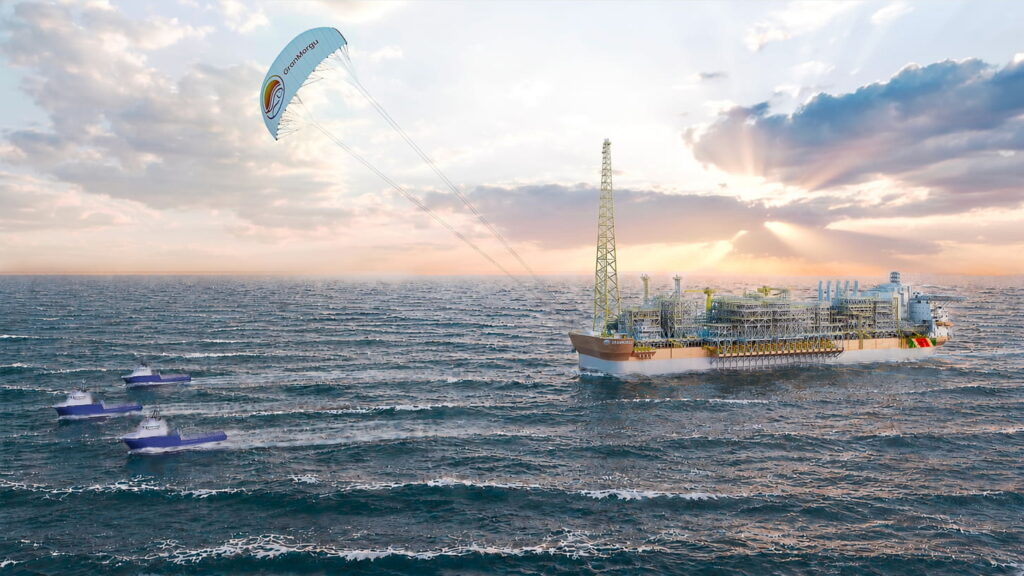
SBM Offshore’s collaboration with TotalEnergies EP Suriname and Beyond the Sea, a French company focused on kite traction solutions, forms a critical part of this venture. Together, they signed an agreement to assess the feasibility of implementing wind-assisted towing systems for the GranMorgu FPSO project. This initiative promises to reduce towing duration and fuel consumption by employing kite traction systems during the transportation of the FPSO from its construction site in China to its operational waters in Suriname.
The approach is not only about improved logistics; it represents a significant step toward enhancing sustainability in offshore operations. By reducing fuel consumption during the towing phase, this project could help in substantially cutting carbon emissions.
The SeaKite 2400 System
Integral to this initiative is Beyond the Sea’s SeaKite 2400 system, which offers automatic traction capabilities that can adapt to varying wind conditions. This innovative solution aims to operationalize wind power more effectively, showcasing its potential in maritime applications.
The project will be rolled out through a phased research and development approach focusing on technology development, operational readiness, and intensive onshore testing prior to integration on the GranMorgu FPSO in China.
Goals and Objectives
Laurent Le Touze, SBM Offshore’s Group Technology and Product Development Director, emphasized the study’s importance in lowering carbon footprints and enhancing energy efficiency across offshore logistics. Through this collaboration, the partners aim to validate the kite’s wing launching and recovery systems while collecting data to optimize the system’s sizing through digital modeling.
This project represents a groundbreaking use of kite traction towing for an FPSO, which necessitates meticulous risk management and close coordination among all stakeholders to ensure safety and success.
The GranMorgu Development
The GranMorgu development sits at the heart of TotalEnergies’ ambitious plans in Suriname, encompassing a significant reserve of recoverable oil estimated at over 750 million barrels in water depths ranging from 100 to 1,000 meters. The FPSO is designed to support future tie-back opportunities, ensuring longevity in oil production capacity.
TotalEnergies anticipates that the investment for the project could reach up to $12.2 billion, with the expectation of producing about 220,000 barrels per day. Initial production is scheduled to commence in 2028, marking a significant milestone for both the company and the Surinamese economy.
Commitment to Sustainability
Frédéric Beys, TotalEnergies’ GranMorgu Project Director, reinforced the commitment to energy efficiency in all operations. He expressed pride in supporting the efforts to scale up the SeaKite system during the towing phase. This initiative is framed as a meaningful leap toward establishing innovative wind-assisted propulsion solutions within maritime transport.
A Look Ahead
The inclusion of wind-assisted kite traction towing not only showcases an innovative approach to offshore logistics but also aligns with the broader themes of decarbonization and sustainability pressing the global energy sector. The outcome of this project could inspire similar ventures, enhancing the eco-friendliness of maritime operations while paving the way for future advancements in this emerging technology.
In an industry facing significant environmental challenges, the adoption of novel technologies such as the SeaKite system exemplifies a promising direction, potentially transforming how energy resources are developed and transported offshore.