
Sable Offshore, a Texas-headquartered oil and gas company, is set to resume oil production at its third platform off the California coast next month, marking the latest step in the company’s phased effort to bring its offshore operations back online.
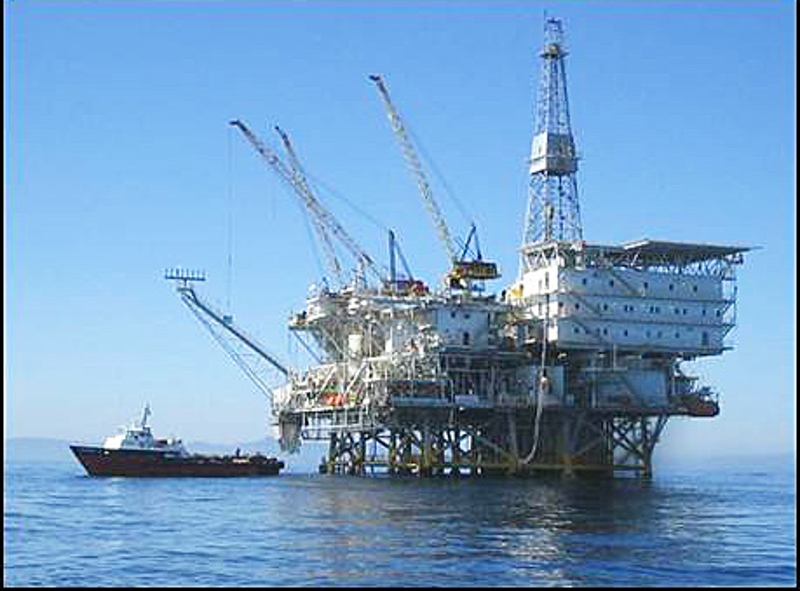
Recently, Sable has progressed field operations at the Santa Ynez Unit (SYU), the Las Flores Canyon Midstream Processing Facility (LFC), and the Santa Ynez Pipeline System (SYPS) toward what the company describes as steady-state operations. This comeback follows the resumption of oil production from the Heritage platform in early April 2026.
By July 2026, an average of approximately 47 wells across the Harmony and Heritage platforms were operational, yielding around 721 gross barrels of oil per day, per well. Sable has set ambitious goals, estimating to bring all 77 production wells on these two platforms online during the third quarter, while the Hondo platform is expected to restart in September 2026.
The company has initiated a wireline campaign targeting perforation additions and optimization of producing wells at the Harmony platform since August 2026. Five completed perforation additions, each predicted to produce an incremental 600 estimated gross barrels of oil daily, are expected to come online alongside the Hondo platform’s restart.
Looking ahead, four additional perforation additions at the Hondo platform—also aimed to yield around 600 gross barrels of oil daily—are planned for completion in early Q4 2026. Interestingly, the California regulatory environment has stirred complications; local refineries were unable to adequately plan for SYU’s first sales, leading to the displacement of various imports in Q2 2026. This misalignment resulted in Sable incurring $18.5 million in non-recurring demurrage charges.
As Sable noted, the unanticipated influx of Pacific Outer Continental Shelf (Pacific OCS) crude has prompted refiners to temporarily limit throughput of this crude and apply quality deducts based on sulfur content and other parameters. However, the Hondo platform is expected to produce oil with lower sulfur content, which could normalize field-wide sulfur levels upon its planned restart later this year.
In the fourth quarter of 2026, Sable plans to test chemical-based solutions designed to sweeten SYU crude production and further reduce sulfur content, with full-scale implementation anticipated for 2027. This innovative approach underscores the company’s commitment to not only meet market demands but also adhere to increasingly stringent environmental standards.
Sable has expressed optimism that California refineries will adjust their crude oil supply slate beginning in September 2026, permitting them to accept an increased volume of Pacific OCS barrels from the SYU while decreasing reliance on imported barrels. This transition is expected to alleviate the throughput constraints that have historically hampered the industry’s efficiency in the region.
Furthermore, the company is actively negotiating to establish waterborne crude oil marketing solutions from existing marine terminals in the Los Angeles area. This strategic move aims to enhance marketing flexibility and create a more robust distribution channel in the near term.
Jim Flores, Sable’s Chairman and Chief Executive Officer, expressed encouragement about the momentum in operations: “The Sable team was able to make strong progress in ramping up operations in the second quarter. We are encouraged by the productivity of the wells at the SYU with their higher-than-expected production with minimal to no observable decline.” He added, “Through the various solutions we have identified, we look forward to working with our midstream and downstream partners to maximize the amount of domestic crude oil from the SYU getting to market for the benefit of California consumers and the U.S. Military and its allies globally.”