
Norway’s state-owned energy giant Equinor has announced a significant investment alongside key partners – Petoro, Shell, TotalEnergies, and ConocoPhillips – directing over NOK 4 billion (approximately $410–420 million) towards an ambitious new subsea development aimed at enhancing gas production in the Norwegian sector of the North Sea.
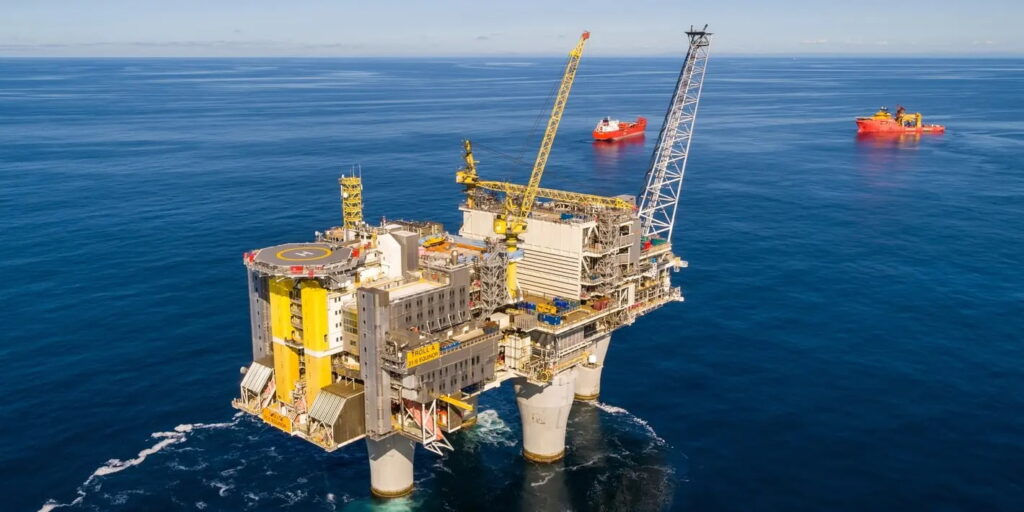
This strategic investment is part of the TWIN project, standing for Troll West Increased Gas Recovery North. This initiative aims to significantly boost gas production, contributing around 11 billion standard cubic meters of gas. It represents a crucial step in the third phase of the Troll development, which exploits resources from the Troll West reservoir situated in the North Sea.
Scheduled to come online in phases, the TWIN project will enhance production capabilities related to both the Troll A platform and Kollsnes plant, ensuring the continuation of high production levels through to 2030. The 2026 rollout of the second step of the Troll development illustrates the proactive measures that the partners are taking to maximize output from this vital energy asset.
One notable aspect of this project is its commitment to sustainability. Equinor emphasizes that both the Troll A platform and the associated onshore processing facility will be powered by electricity sourced from the shore. This strategy results in significantly low-emission gas production, aligning with global sustainability goals.
The TWIN project’s infrastructural components are set to include two new subsea wells equipped with a template, as well as a connecting pipeline to existing subsea structures. In addition, extensions to the umbilical and MEG (monoethylene glycol) line will support the new development, indicating a thoughtful approach to integrating with established systems.
The consortium leading the TWIN project comprises several key stakeholders: Equinor (30.55%, as the operator), Petoro (55.93%), A/S Norske Shell (8.19%), TotalEnergies EP Norge (3.69%), and ConocoPhillips Skandinavia (1.64%). The initiation of this project follows an environmental impact assessment, enabling the team to approach the Norwegian Ministry of Energy for the necessary approvals as mandated by the Petroleum Act.
Gunnar Nakken, Senior Vice President for Projects and Subsea Norway at Equinor, expressed optimism about the project’s timeline, stating, “We have an ambition to start production as early as 2028. By simplifying, increasing standardisation and reusing existing infrastructure and equipment, we are reducing costs and enabling faster production.” This forward-thinking approach not only aims to boost efficiency but also promises to sustain jobs and create value in the region.
Looking ahead, Equinor has ambitious goals for overall gas production from the Norwegian Continental Shelf (NCS), targeting approximately 1.3 million barrels per day by 2035. The Troll field itself is crucial, reportedly holding around 40% of Norway’s total gas reserves, thus acting as cornerstone of the nation’s hydrocarbon production landscape.
The Troll field’s output underpins roughly 10% of Europe’s gas consumption, establishing its significance on a broader scale. Remarkably, Equinor highlights that the annual energy production from the Troll field can match about three times the output from Norway’s hydropower resources, showcasing the field’s massive contribution to energy needs.
As competition intensifies and fields age, Nakken points to essential shifts in strategy: “Our ambition is to halve costs and execution time for our subsea projects and develop six to eight such projects per year towards 2035.” This indicates a keen awareness of the challenges and opportunities facing the industry, setting the stage for future developments.
The TWIN project announcement follows closely on Equinor’s recent disclosure of a new concept aimed at consolidating multiple North Sea discoveries into one comprehensive development project, which is expected to tap into approximately 240 million barrels of oil equivalent. Such initiatives underscore the company’s focus on leveraging existing resources for maximized production and sustainability.