
The European Union (EU) has emerged as the main destination for Russia’s Arctic liquefied natural gas (LNG) exports, effectively becoming the backbone of the Russian LNG business in the first half of 2026. This shift highlights Europe’s substantial financial commitment to satisfying its LNG demands, as evidenced by a recent analysis from Urgewald, a German non-profit environmental research organization, indicating that billions of euros have flowed to Russia for its LNG supplies.
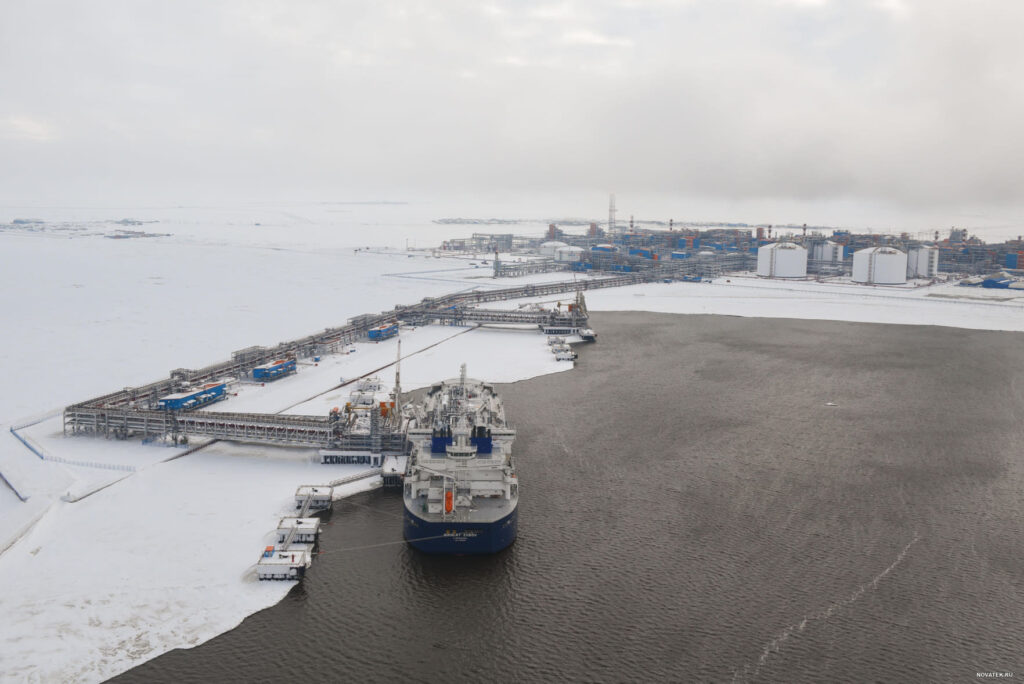
According to the Urgewald analysis of Kpler data, the EU spent approximately €5.96 billion ($6.82 billion) on Yamal Arctic LNG between January and June 2026, receiving 136 cargoes out of a total of 140 shipped globally. This statistic illustrates that over 97% of the total shipments were directed to EU ports, marking a significant shift in trade dynamics.
Sebastian Rötters, a Sanctions Campaigner at Urgewald, stated, “In the fifth year of the war against Ukraine, the EU is still helping to sustain Russia’s Arctic LNG sector. Yamal LNG relies heavily on a specialized fleet, European ports, and services to continue its operations. Europe continues to supply all three.” This raises critical questions about Europe’s role in the ongoing geopolitical climate and the implications for its energy policies.
Rötters further emphasized, “The figures are stark. Almost every Yamal cargo in the first six months of 2026 went to Europe. China has largely disappeared as a destination during this period, while the EU has become even more central to the project. This is not happening in a vacuum.” He points out that as Russia intensifies its military actions in Ukraine, Europe continues its imports of natural gas from Yamal at a remarkable rate—averaging over 55,000 tonnes of LNG per day in the first half of 2026.
Urgewald’s findings reveal that top EU destinations for Russian LNG in the first half of 2026 included France (51 cargoes, 3.74 million tonnes), Belgium (37 cargoes, 2.70 million tonnes), Spain (34 cargoes, 2.50 million tonnes), the Netherlands (12 cargoes, 881,970 tonnes), and Portugal (2 cargoes, 147,170 tonnes). These statistics underscore the heavy reliance of the EU on Russian LNG.
Additionally, key European ports receiving Russian LNG in H1 2026 included Zeebrugge (37 cargoes), Dunkerque (26 cargoes), Montoir (25 cargoes), Bilbao (17 cargoes), Gate/Rotterdam (12 cargoes), and others. This influx of LNG highlights a significant operational dependency on Russia’s energy exports, raising concerns about the long-term implications of such reliance.
The analysis also reveals that non-Russian shipping companies played a crucial role in transporting Yamal LNG. Notably, Seapeak—linked to the UK and Canada—handled 56 cargoes (4.10 million tonnes), representing around 40% of total Yamal LNG volumes. Similarly, Dynagas, with connections to Greece, accounted for 49 cargoes (3.58 million tonnes), amounting to about 35% of the LNG volumes. MOL and COSCO, representing Japan and China, were responsible for an additional 35 cargoes (2.57 million tonnes), comprising about 25% of shipments. This indicates that the logistics of Yamal LNG transport are not solely reliant on Russian entities, but rather depend on international partnerships and services.
Moreover, an additional 18 cargoes, totaling 1.32 million tonnes, involved ship-to-ship transfers in Murmansk destined for the EU, all linked to MOL/COSCO vessels. Such intricate logistics demonstrate that the operation of Yamal LNG extends well beyond Russian borders, intertwining with international maritime networks.
In stark contrast to the surge in EU shipments, China received only four cargoes over the same six-month period—a dramatic drop from previous years. This emphasizes Europe’s enhanced role as the primary recipient of Yamal’s output. The EU received 117 cargoes and 8.57 million tonnes in the first half of 2025, compared to 136 cargoes and 9.97 million tonnes in the first half of 2026—a significant increase of 16% in volume.
The collapse of Asia-bound deliveries—from 25 cargoes and 1.80 million tonnes in early 2025 to just 4 cargoes and 282,248 tonnes in the first half of 2026—further underscores this trend. It highlights Europe’s significant role not just in purchasing Russian LNG, but in absorbing nearly all output from one of Russia’s key LNG projects.
Urgewald has highlighted that Yamal’s reliance on Europe extends beyond import terminals to shipyards as well. Fayard in Denmark remains the only EU shipyard capable of servicing the specialized Arc7 ice-class tankers essential for navigating Arctic waters. With up to six Arc7 vessels potentially needing servicing before the EU maritime services ban on Russian LNG vessels takes effect on January 1, 2027, the implications for the future of Yamal LNG operations could be profound.
Every serviced Arc7 tanker represents a continued lifeline for the fleet carrying Russian LNG to Europe, thus sustaining significant revenue for the Kremlin. An Urgewald statement confirmed the arrival of the Rudolf Samoylovich at Fayard on June 30, underscoring the ongoing operational relationships that facilitate these energy exports.
“Fayard could drastically alter the logistics of Russia’s LNG business if they cease maintaining Arc7 tankers, but their decisions thus far indicate otherwise,” cautioned the German non-profit organization, raising further questions about the future of energy dependencies and geopolitics in Europe.