
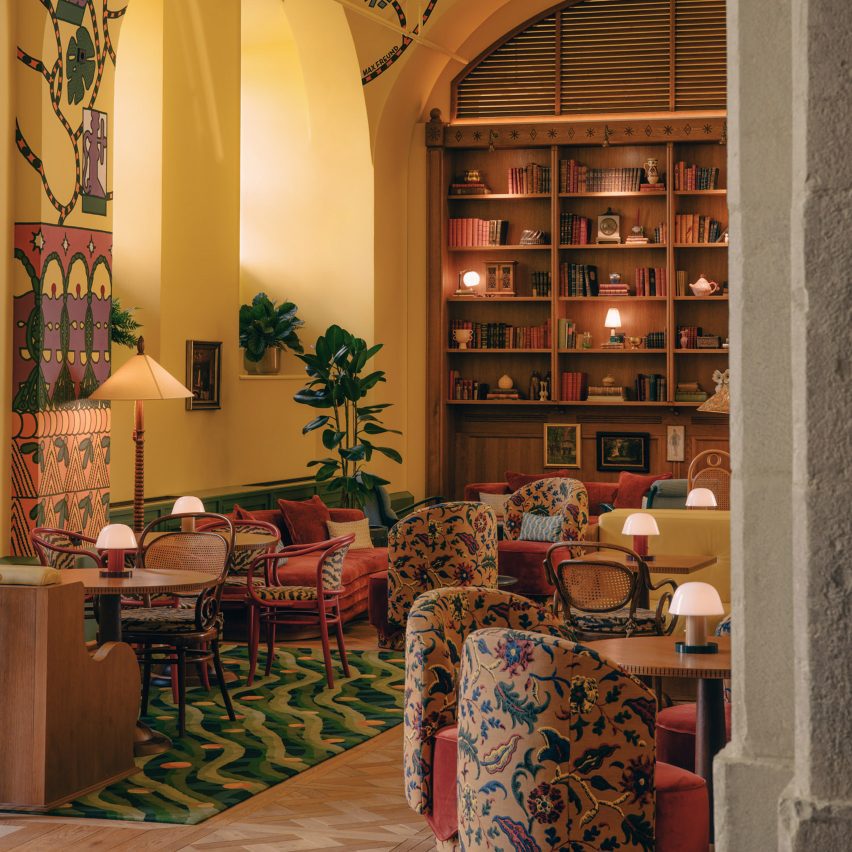
Vienna’s architectural landscape is rich with history and artistry, a fact masterfully captured by interior design studio Stephanie Barba Mendoza in the stunning Wilde Vienna Fleischmarkt aparthotel. Situated in a landmark 19th-century post office building in the heart of the city’s Fleischmarkt district, the hotel pays homage to the artistic legacy of Vienna while embracing contemporary design.
A Historical Backdrop
Constructed in 1854 and operational for 150 years, the building that houses the Wilde aparthotel was once a bustling hub for communication and connection. Its location in a district known for birthing significant art movements—from the Viennese Secession to the Wiener Werkstätte—serves as a fitting backdrop for Mendoza’s design philosophy. She sought to create communal spaces that reflect this rich cultural heritage, blending history with modernity.
Design Philosophy
Mendoza’s conceptual approach revolves around the idea of the post office as a place of exchange—of ideas, culture, and community. “I wanted to honor the extraordinary heritage of the building while creating spaces that feel relevant, open, and alive today,” she explains. This sentiment is not just about aesthetics; it’s about fostering connections and interactions, reminiscent of Vienna’s famed coffeehouses and artistic movements.
Inviting Lobby Spaces
The lobby of the Wilde aparthotel is an immediate reflection of Mendoza’s vision. With its towering vaulted ceilings, the lobby invites exploration while encouraging intimate gatherings. Mendoza aimed to evoke a “stube,” a cozy German living room, by integrating multiple seating arrangements scattered throughout.
Guests can find a variety of seating options—from tiger-print chairs on a swirl-patterned green rug to a brown velvet sofa nestled against a shelf filled with art objects and antique books. The space is awash in a buttery yellow hue, with a striking geometric mural drawing inspiration from historical Viennese art.
Artistic Inspirations
Mendoza’s connection to Vienna’s creative past doesn’t stop at visuals. Murals, often featured in the works of the Secessionists, act as a bridge between the old and the new. “We were deep in the Secession and the Jugendstil movement at the time, and it felt like the right moment to bring in a local artist who could carry that inspiration but speak with a completely new voice,” she says, underscoring the importance of reinterpretation over mere replication.
Dining Ambiance at Rascal
Stepping beyond the lobby, guests enter Rascal, the hotel’s thoughtfully designed restaurant. Here, the walls are a serene off-white, accented by a hand-painted red chequered line winding around the room’s columns—an homage to traditional Viennese styles. This decorative approach not only pays tribute to the past but also creates a visually engaging atmosphere.
At the heart of Rascal lies a bar counter featuring ornate gold fretwork, reminiscent of the intricate designs found in Secessionist jewelry. The rest of the space boasts polished wood tables and crimson leather chairs, complemented by checkered blue banquettes, contributing to an inviting yet upscale dining experience.
Blend of Old and New Patterns
The design elements in Rascal continue to draw from Vienna’s artistic traditions. Chequerboard patterns—often seen in coffeehouses—dot the banquettes, while large mirrors and brass hanging lamps provide dramatic touches. Mendoza’s aim is to create an environment that breaks away from dull predictability, stimulating conversation and interaction among guests.
Attention to Detail
Even the guest bathroom does not escape Mendoza’s meticulous attention to design. Featuring a delightful clash of chequerboard flooring and veiny marble skirting, it is a striking example of how practicality can coincide with artistic flair.
A Nod to the Past, a Vision for the Future
The Wilde Vienna Fleischmarkt aparthotel exemplifies how design can breathe new life into historical contexts, weaving together threads of the past with the present. Through her thoughtful design choices, Stephanie Barba Mendoza transforms a former post office into a modern oasis that honors Vienna’s artistic legacy while creating welcoming spaces for today’s travelers.
Photography by Julius Hirtzberger.