
Luxury Electric Vehicles Market
Overview of the Luxury Electric Vehicles Market
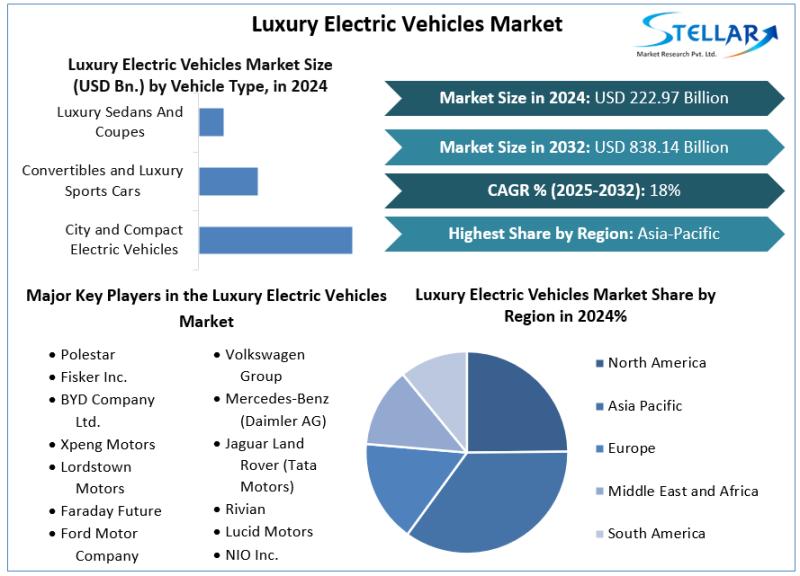
The luxury electric vehicles (EV) market is witnessing a transformative shift, with its value projected to soar from USD 222.97 billion in 2024 to an impressive USD 838.14 billion by 2032, registering a robust CAGR of 18% during 2025-2032. This market is not just about elegant designs and powerful performance; it’s also about embracing sustainability and innovation in automotive technology.
A New Definition of Premium Mobility
Luxury electric vehicles are redefining what it means to drive a premium automobile. They seamlessly blend high-end design with state-of-the-art technology and remarkable comfort. As the world grapples with climate change and urban pollution, luxury EVs offer an eco-friendly alternative without compromising on the lavish experience that affluent consumers seek.
Market Dynamics
Technological Innovations
One of the most significant forces driving the luxury EV market is rapid advancements in battery technology. New developments focus on enhancing driving range, improving charging speed, and increasing battery life, all of which help mitigate some of the anxiety associated with electric vehicles.
Digital Experience
Luxury car buyers increasingly expect their vehicles to offer more than just transportation; they look for a sophisticated digital experience. Features such as advanced driver assistance systems, expansive infotainment screens, and over-the-air software updates have become vital components in luxury EVs.
Regulatory Influences
Government policies around the globe are also playing a critical role in shaping this market. Stricter emissions regulations and incentives for electric vehicles are nudging both manufacturers and consumers towards electric mobility, particularly in the luxury segment where consumers are often early adopters.
Key Drivers of Growth
Environmental Awareness
Growing environmental consciousness among affluent consumers is a primary driver behind the shift toward luxury electric vehicles. High-income buyers increasingly desire to reduce their carbon footprints while maintaining a lifestyle marked by comfort and performance.
Technological Leadership
Luxury automakers have always prided themselves on being at the forefront of automotive technology. The integration of electric drivetrains into luxury models allows manufacturers to showcase cutting-edge advancements, from enhanced battery systems to autonomous driving capabilities.
Government Incentives
Tax breaks, purchase subsidies, and preferential treatment for electric vehicles in urban areas further enhance their attractiveness, particularly in locations where high-density luxury car ownership prevails.
Performance Perception
Electric motors deliver instant torque and acceleration, often surpassing traditional internal combustion engines in daily driving scenarios. This performance edge, along with the quiet and refined driving experience of luxury EVs, is increasingly drawing in buyers seeking high performance.
Market Segmentation
The luxury electric vehicles market can be segmented based on propulsion and vehicle type:
By Propulsion
- BEVs (Battery Electric Vehicles)
- PHEVs (Plug-in Hybrid Electric Vehicles)
- Luxury Electric SUVs and Crossovers
- EREVs (Extended Range Electric Vehicles)
By Vehicle Type
- City and Compact Electric Vehicles
- Convertibles and Luxury Sports Cars
- Luxury Sedans and Coupes
Regional Analysis
Europe leads in the luxury EV market, fueled by stringent environmental regulations and generous incentives. Many premier car brands in Europe are transitioning to electric models, actively expanding their portfolios to meet demand.
North America follows closely, characterized by high purchasing power and a fascination with technology. A surge in luxury electric SUVs and performance models reflects the evolving landscape in this region.
Asia Pacific is emerging as a significant player, driven by urbanization and air quality concerns, along with strong government backing for electric vehicles. The increased disposable income among consumers in this region is also fostering demand for luxury EVs.
Market Opportunities
Several exciting opportunities lie ahead for the luxury electric vehicle market:
Battery Technology Advancements
Continuing improvements in battery technology—longer ranges, quicker charging, and increased durability—will further solidify the appeal of luxury EVs among consumers.
Advanced Software Integration
Incorporating cutting-edge software and digital services, like personalized in-car experiences and seamless connectivity, can significantly enhance luxury electric vehicles’ appeal.
Emerging Markets
As urbanization rises and wealth accumulates in emerging markets, there is considerable potential for growth in demand for premium, sustainable mobility solutions.
Charging Infrastructure
The expansion of charging networks and reliance on renewable energy sources to power these vehicles not only bolsters their sustainability credentials but can also catalyze further adoption among consumers.
Key Players in the Market
Several manufacturers are leading the charge in the luxury electric vehicle space:
- Tesla, Inc.
- Nissan Motor Co., Ltd.
- Chevrolet (General Motors)
- BMW AG
- Audi AG
- Hyundai Motor Company
- Kia Corporation
- Ford Motor Company
- Volkswagen Group
- Mercedes-Benz (Daimler AG)
- Rivian
- Lucid Motors
- NIO Inc.
- Polestar
- BYD Company Ltd.
Frequently Asked Questions
-
What is the CAGR of the Luxury Electric Vehicles Market?
The CAGR is 18%. -
Which region holds the maximum share?
North America leads. -
What time frame is the report covering?
The forecasted period is 2025-2032. -
What will the market size be in 2032?
It’s expected to reach USD 838.14 billion. -
How is the market segmented?
It is segmented by propulsion and vehicle type.
Explore Other Trending Reports
For continuous insights on market trends and opportunities, keep a close eye on the luxury electric vehicles market, where technology and sustainability are seamlessly coming together to shape the future of premium mobility.